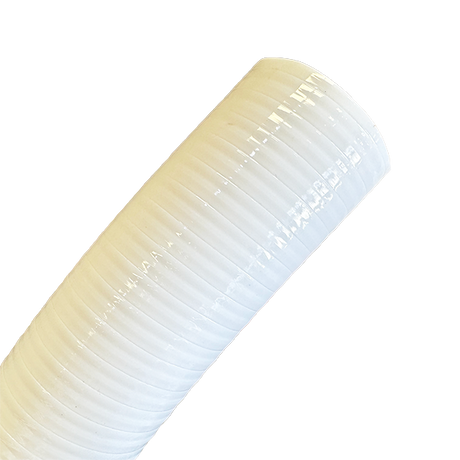
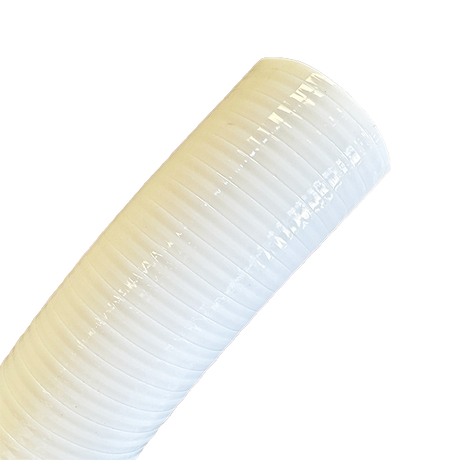
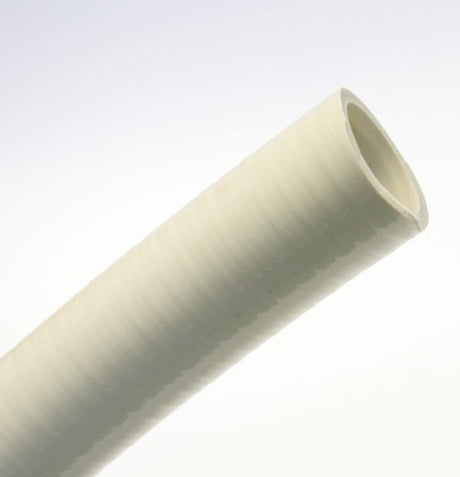
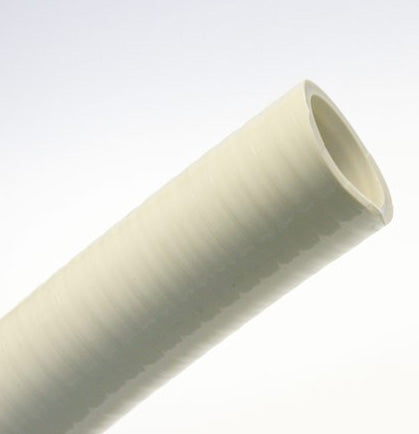
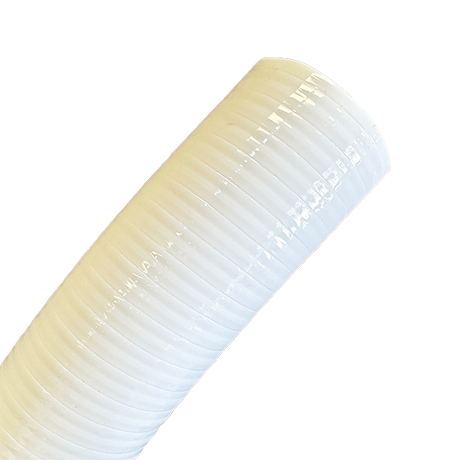
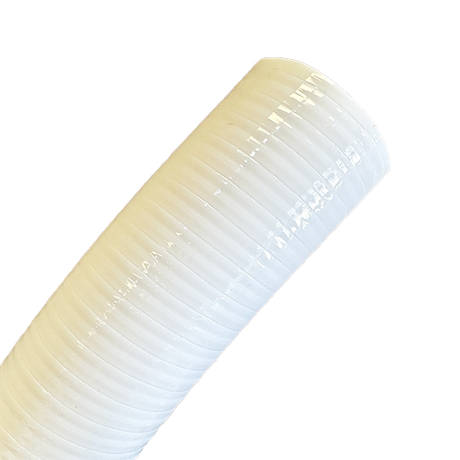
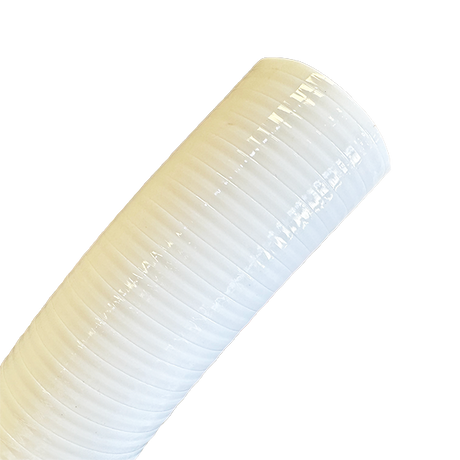
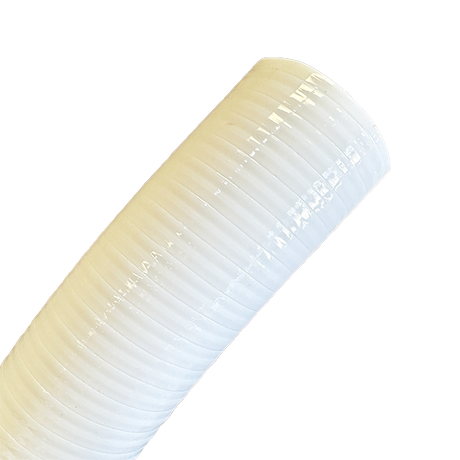
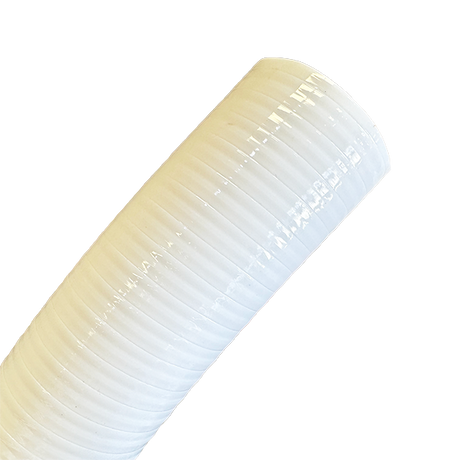
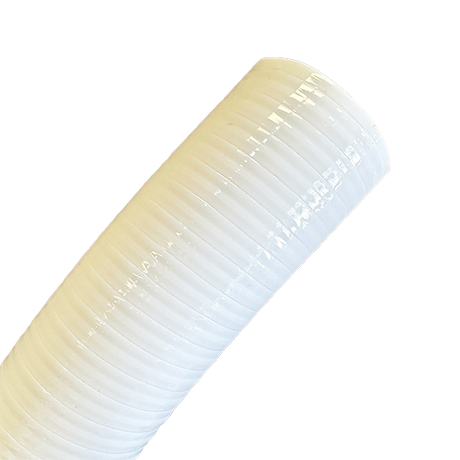
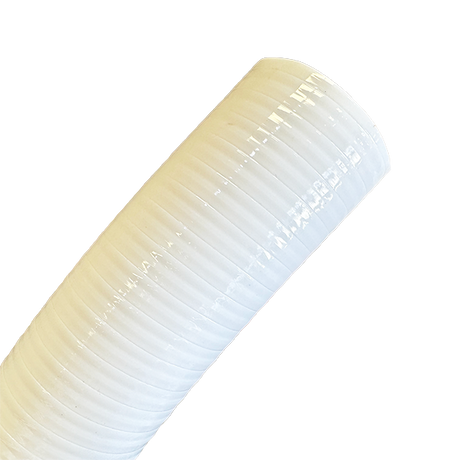
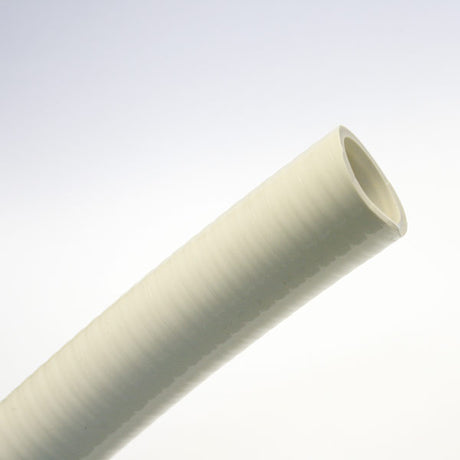
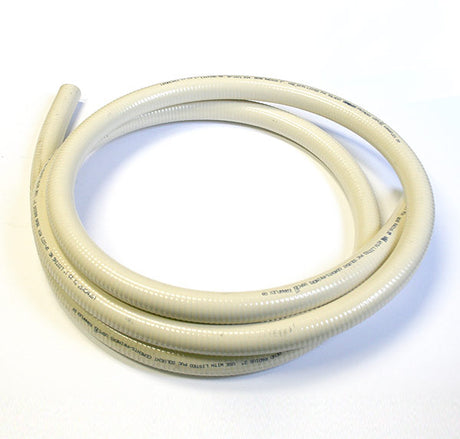
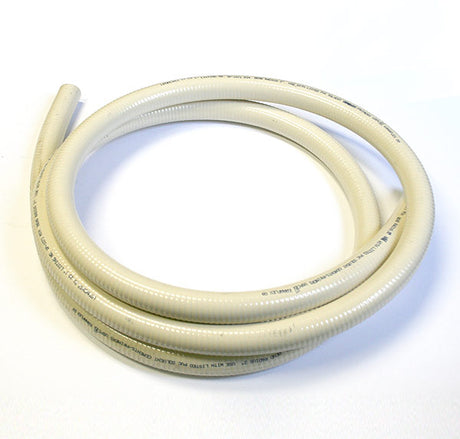
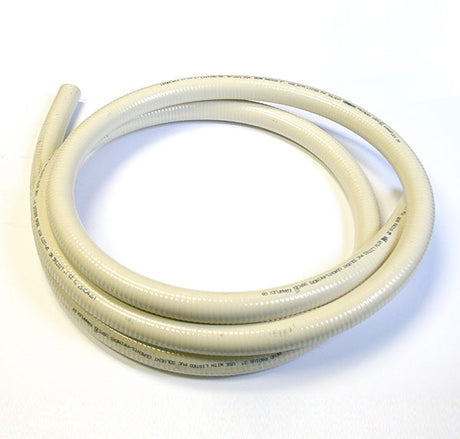
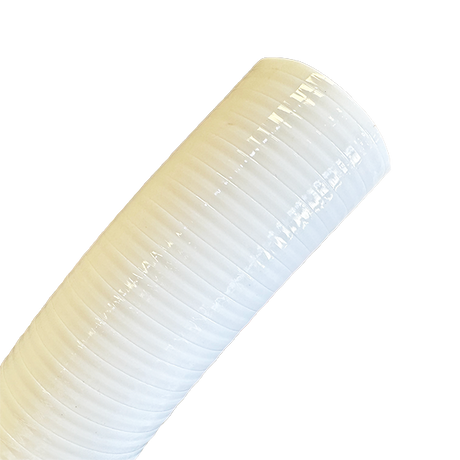
Even though these pipes are flexible, they offer the same strength and durability of rigid PVC. The pipes are rated between 60 - 100 psi working pressure at 72° F, and they can also be used in vacuum applications. The pipes are rated for temperatures ranging from –13 degrees to 158 degrees, so they can be used outdoors in most climates. The ability to withstand exposure to the elements and corrosion from things in the soil also adds to the versatility of these pipes.
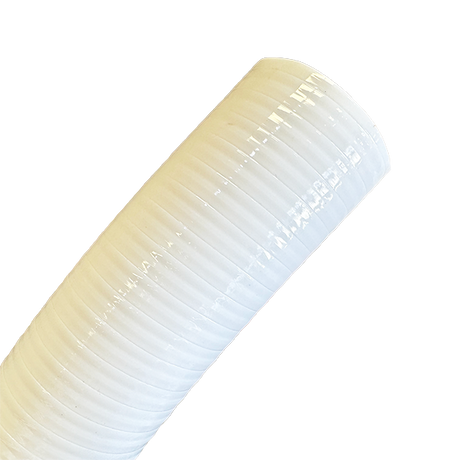
Flexible PVC pipe can be fit with rigid PVC couples and elbows to allow these pipes to connect to other PC systems. They feature rigid PVC helix with a smooth bore and a smooth outside diameter. They need to be fitted using solvent weld fittings. Depending on the diameter of the pipe chosen, it will have a minimum bend radius of 4 to 5 inches. These pipes range in size from 1/2 to 3 inches and come in lengths of 5 and 10 feet. The pipe can be cut to fit whatever application it is being used for. If you are in the market for flexible PVC pipe for your project, PVC Fittings Online has the right products at an affordable price.
Types of flexible PVC pipe
Standard white flexible PVC is the most common form — a white, semi-translucent pipe with a rigid PVC helix inside that resists crushing and kinking while maintaining the pipe's round profile under bending. Used in pool and spa plumbing, pump connections, water lines, and air lines.
Black flexible PVC uses UV-resistant additives that make it significantly more durable in direct sunlight than white flex pipe. Ideal for above-ground outdoor installations — pond systems, irrigation, landscape water features — where the pipe will be exposed to the elements long-term. The black color also blends into outdoor settings naturally.
Both types feature a smooth bore interior for unrestricted flow and a smooth outside diameter for reliable glue joints with standard fittings.
Advantages of flexible PVC pipe
Fewer fittings required. Rigid pipe needs an elbow every time a line changes direction. Flexible PVC bends by hand to navigate corners, obstructions, and grade changes — reducing the number of glue joints in the system, which directly reduces potential leak points and installation time.
Absorbs vibration. Flexible PVC acts as a natural vibration dampener between pump equipment and fixed pipe runs. This reduces stress on joints and fittings near pumps — a common cause of joint failure in rigid systems.
Easy to work with. It cuts with a standard PVC cutter or hacksaw, glues with the same primer and cement as rigid pipe, and requires no special tools or heat to bend. Most installers find it significantly faster to work with than rigid pipe in tight spaces.
Above and below ground use. Flexible PVC resists moisture, soil corrosion, fertilizers, and the freeze-thaw movement that can stress rigid pipe joints. It can be installed in both buried and exposed applications across most climates.
Wide temperature range. Rated from -13°F to 158°F, flexible PVC performs in outdoor installations through most of North America's climate range without becoming brittle in cold weather the way rigid PVC can.
Disadvantages of flexible PVC pipe
Higher cost per foot than rigid pipe. Flexible PVC costs more than Schedule 40 rigid pipe of the same diameter. However, savings on fittings and labor typically offset much of this difference — particularly on runs with multiple direction changes.
Lower pressure rating than rigid Schedule 40. Flexible PVC is rated at 60–100 PSI working pressure at 72°F depending on size. Standard Schedule 40 rigid pipe carries higher pressure ratings at the same diameter. For high-pressure applications, rigid pipe is the better choice.
Not rated for potable (drinking) water. Our flexible PVC pipe carries an NSF-50 rating (pool and spa water contact) but is not NSF-61 rated for potable water. It is suitable for pools, spas, irrigation, ponds, and non-drinking water systems. It is acceptable for livestock and fish water contact, subject to local codes.
Cannot be used in dead-head pressure situations. Flexible PVC should not be used where the system is pressurized but there is no flow — known as dead-head pressure. Constant dead-head pressure can cause the pipe to balloon and eventually fail at a joint. Standard pool pump systems are fine; booster pump configurations with repeated stop-start pressure cycles are not recommended.
Not rated for potable water or hot water. Do not use flexible PVC for drinking water supply lines or in systems where water temperatures exceed 158°F.
Minimum bend radius applies. Each size has a minimum bend radius below which kinking can occur — typically 4 to 6 inches depending on diameter. Forcing the pipe into a tighter bend will collapse the helix and restrict flow.
How to install flexible PVC pipe
Flexible PVC installs the same way as rigid PVC pipe — cut, prime, cement, and glue into standard Schedule 40 fittings.
Tools and materials needed: PVC pipe cutter or fine-tooth hacksaw, deburring tool or sandpaper, PVC primer, PVC solvent cement (use standard Schedule 40 cement — the same cement used for rigid PVC works correctly with flex pipe), and a clean rag.
- Measure and cut. Measure the run needed and cut the flex pipe square using a pipe cutter or fine-tooth saw. Avoid sawing at an angle — a skewed cut reduces glue surface area. Clean the cut end with a rag to remove shavings.
- Deburr. Remove any burrs from the cut end using a deburring tool or sandpaper. The outer surface of the pipe must be smooth for a good glue joint.
- Dry-fit. Push the flex pipe end into the fitting socket to confirm it seats fully. Mark the insertion depth on the pipe with a pencil.
- Apply primer. Using the applicator in the primer can, coat the outside of the pipe end and the inside of the fitting socket. Allow to tack dry — 5 to 10 seconds.
- Apply cement. Apply an even coat of solvent cement to both primed surfaces. Work quickly — cement begins setting within seconds.
- Insert and twist. Push the pipe firmly into the fitting socket with a slight quarter-turn to distribute the cement. Push to your depth mark.
- Hold for 30 seconds. Hold the joint still to prevent the pipe from backing out before the cement grabs.
- Cure before pressurizing. Allow at least 2 hours at room temperature before pressurizing the system.
Important: Flexible PVC is for use with solvent weld fittings only — it is not compatible with threaded fittings. Do not use barbed insert fittings or hose clamps as a substitute for a solvent-weld connection in pressurized systems.
Maintenance
Flexible PVC pipe in buried or enclosed installations requires virtually no maintenance — it does not rust, corrode, or degrade in soil contact, and properly made solvent-weld joints are permanent.
For above-ground or exposed installations:
- Annual visual inspection. Check for cracking, kinking, UV bleaching, or joint weeping. White flexible PVC exposed to prolonged direct sunlight will eventually chalk and degrade — consider painting with a water-based latex paint or switching to black UV-resistant flex pipe for long-term above-ground runs.
- Winterization. Drain exposed flexible PVC lines before the first hard freeze. Although flexible PVC is more resilient than rigid pipe in cold temperatures, standing water in a sealed pressurized system can still damage joints if it freezes.
- Check pump connections. Inspect flex pipe connections at pump inlets and outlets annually. Pump vibration causes cyclical stress at the fitting joints over time — replace if any weeping or cracking is visible at the joint.
Common applications
- Pool and spa pump connections and plumbing runs
- Hot tub and whirlpool bath plumbing
- Irrigation system connections around obstacles and grade changes
- Pond and water feature recirculation lines
- Air lines and vacuum lines
- Equipment connections where vibration isolation is needed
- Tight-space plumbing where rigid pipe and elbows won't fit
Specifications
- Vaccum rating: 29.8 In. Hg. (all sizes)
- Temperature range: -13°F to 158°F
- Standards: NSF-50 listed; IAPMO PS 33-2011; FDA non-toxic per IAPMO TSC 31-90